
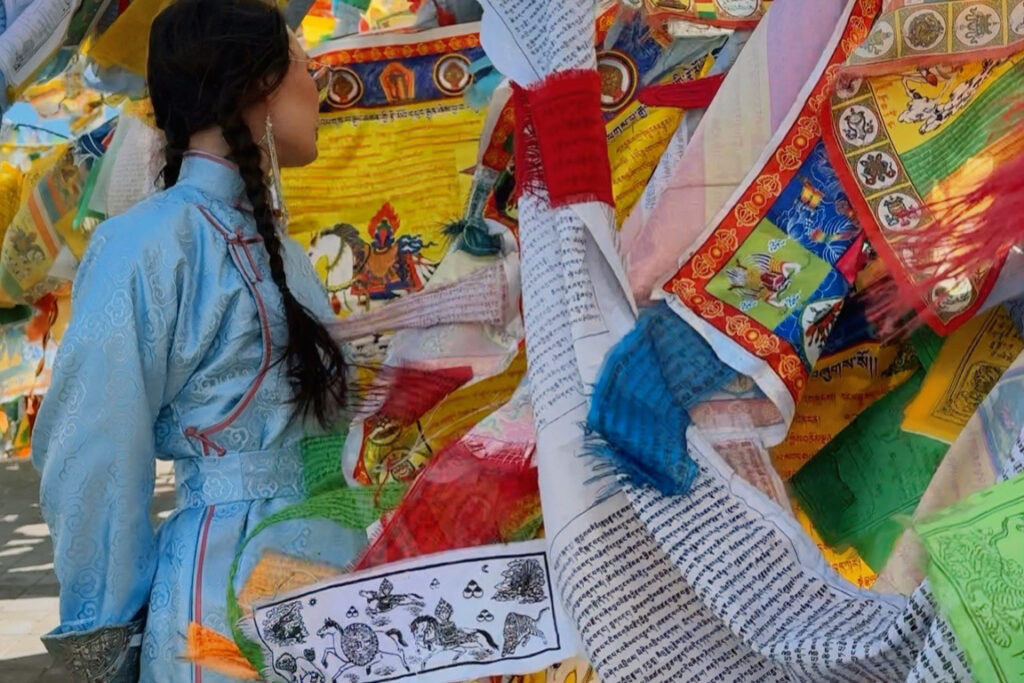
Someone will tell you khiimori means Wind Horse. Maybe you already read it. Google it right now and that is what comes back. Wind Horse. A Mongolian concept. A symbol of good fortune and energy. And that translation is not wrong. It is just the surface. And if you only take the surface, you miss the entire point.
Which is exactly what I want to fix.
This is not just Mongolian
Before anything else, khiimori is not exclusive to Mongolia the country. It is a concept carried by Mongolic peoples across the whole steppe: Mongolians, Buryats, Tuvans, Kalmyks, Inner Mongolians. The same word. The same cosmology. Thousands of miles of shared understanding about what makes a human being actually alive.
I want to say this clearly because the tendency, especially in Western travel content, is to pin ancient nomadic wisdom to one flag, one border, one tourist destination. Khiimori belongs to a people, not a passport. The Buryats of Siberia have been carrying this concept as long as anyone. So have the Tuvans. So have communities inside China that most travel writing never reaches.
When you understand that, the concept gets bigger. And more serious.
The translation problem
Wind Horse is a literal translation of two words: хий (khii) meaning wind or air, and морь (mor’) meaning horse. The image that comes with it is the lungta, a prayer flag printed with a horse carrying a jewel, rising on the wind.
You have probably seen this image. It shows up on Instagram, in travel shops, in yoga studios. It gets sold as a general symbol of good vibes. Hang one by your window. Feel better. And that is where the meaning starts to die.
Khiimori is not a symbol. It is not a decoration. It is the animating force of a person, the specific energy that determines whether a person is actually alive.
When your khiimori is strong, you feel it in your body. You wake up and you know what you are for. Things go right not because you are lucky but because you are aligned.
When your khiimori is low, and this is the part nobody translates, you feel that too. A particular kind of flatness. Not sadness exactly. Not depression exactly. Going through the motions. Technically fine and privately hollow.
You know this feeling. Right?
The horse is not decorative
The horse part matters more than people think. In nomadic cultures across the steppe, the horse is not a vehicle. It is a partner, an animal with its own energy, its own spirit, its own relationship to the land. The nomadic way of life was built around this. The horse and the human moved together, read the weather together, survived together.
Horses in nomadic steppe culture are never considered fully tamed. They retain their own spirit, тэнгэрийн морь, “sky horse”, and the relationship between rider and horse is understood as a partnership between two living forces, not ownership.
So when Mongolic peoples say your energy is a Wind Horse, they are not being poetic. They are saying: your inner force is something alive. It needs care. It cannot be caged. But it can be strong or weak, trained or exhausted.
You would not leave your horse in a dark stable for years and expect it to run well. And yet, that is what most people in the West are doing to their khiimori. Not because they are careless. Because nobody told them it existed.
What actually depletes it
The beliefs about what depletes khiimori are specific. And they are not mystical. They translate almost directly into the modern context.
Wrong relationships deplete it. Work without meaning depletes it. Living a life designed by someone else’s expectations depletes it. Being cut off from nature, from physical labour, from anything slower than a screen – depletes it.
And the rituals to restore it are just as specific. Prayer flags are not decorative, they are objects designed to keep your energy moving rather than stagnant. Ovoo ceremonies at sacred sites are acts of renewal: you add a stone, you acknowledge the land, you reconnect to something larger than your daily loop.
Which is why this concept is so relevant now. Not because it is ancient. Because the things that depleted it then are the same things depleting you now.
Why “fortune” misses it too
The other common translation of khiimori is fortune or luck. This person has strong khiimori, meaning they are lucky. But luck is passive. Luck is something that happens to you.
Khiimori is not passive. It is the force from which your fortune flows, the root, not the outcome. This distinction matters because it means khiimori is something you can actually work with. You are not waiting for luck. You are tending to the thing that creates the conditions for your life to go the way you want.
When it is strong, you make better decisions, attract the right people, move through difficulty without collapsing. The luck is a symptom. Khiimori is the source. That is a very different relationship to your own energy.
What comes next
Watch Episode 1 if you want the version I explain standing in the steppe. It lands differently when you see the landscape it came from.
The next post is about Mongolia itself. Not the travel-brochure version. The version that exists when you stop looking at the surface.